The easiest saint costume isn’t really a costume. It’s one object your child can hold, plus one sentence they can say about who they are.
Below are 15 saints you can make without a sewing machine, most of them from an old bedsheet and whatever is in the drawers. For each one we say where the symbol comes from, Scripture or later tradition, because someone at the party will ask your child and it helps to have an answer.
How to pick a saint so the costume is easy
A saint is easiest to recognise by an attribute, not by the costume. An attribute is the object that has identified a figure in paintings for centuries: Peter’s keys, Thérèse’s roses, Noah’s dove. A bedsheet tunic looks the same on everyone. The keys in the hand say who your child is.
We see this at home in Poland, where we make our own saint cards as a family. Our youngest is two and already has a favourite card: Jonah, because there is a big fish. And when children from the wider family played the game this summer, they complained that you could guess the answers just from the attribute icon (an eagle, so it’s John).
So the rule is simple: one tunic + one object + one sentence. The sentence is what your child says when someone asks, “Who are you?” A five-year-old who says “I’m Noah, I built the ark and saved the animals” is better dressed than a child in an expensive costume who doesn’t know who they are.
Store-bought costumes are fine too. Then the sentence matters even more.
The easiest costume of all is already in your child’s closet: St. Carlo Acutis: jeans, a hoodie, sneakers, a rosary and a cardboard laptop.
A tunic in 15 minutes, no sewing
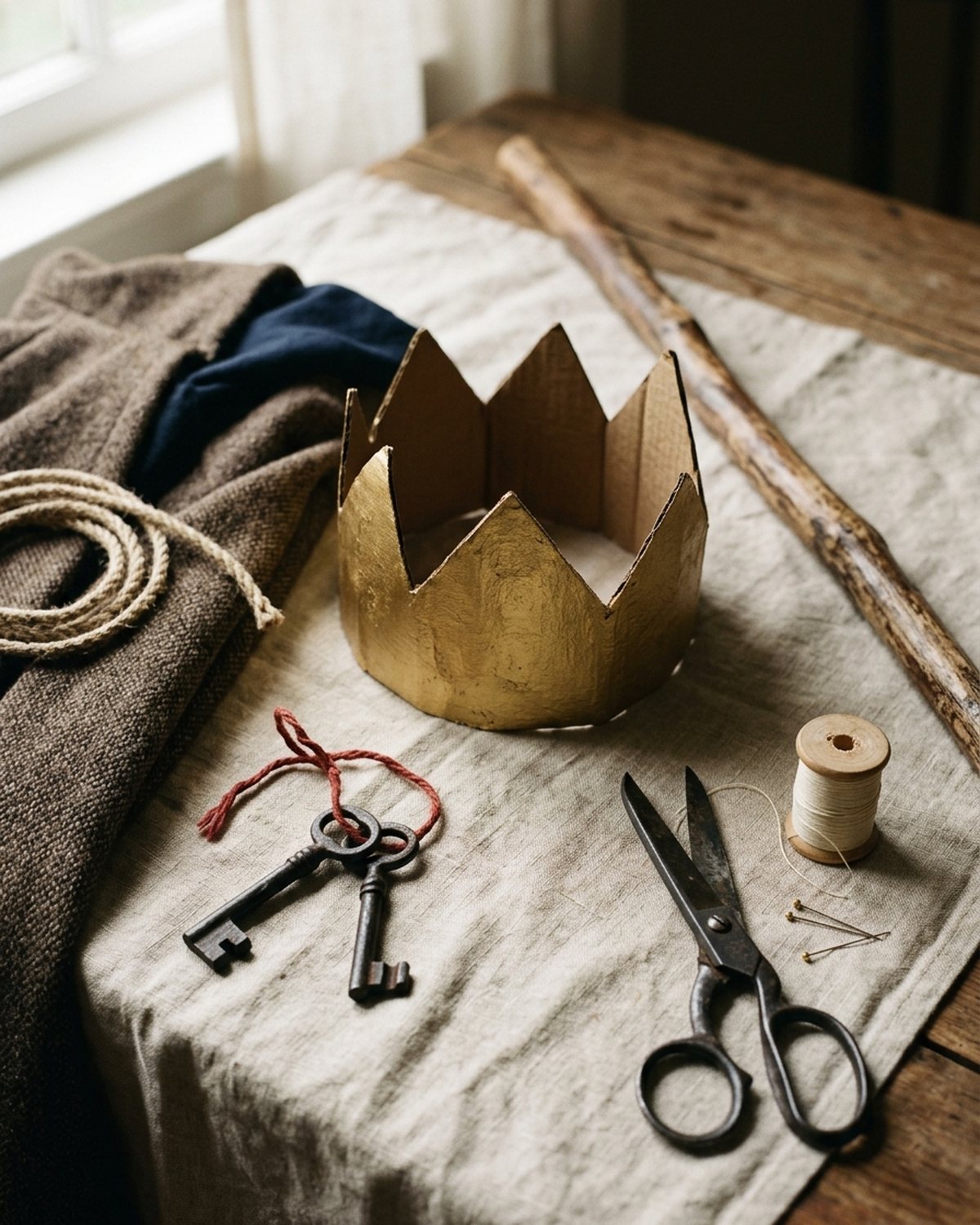
- Fold a bedsheet, blanket or large scarf in half so the fold sits on your child’s shoulders.
- Cut a head hole in the middle of the fold, about the size of a saucer.
- Put it over your child’s head and tie it at the waist with a rope, a bathrobe belt or a length of cord.
- Trim it so it ends above the ankle. Children run at parties, and nobody should trip.
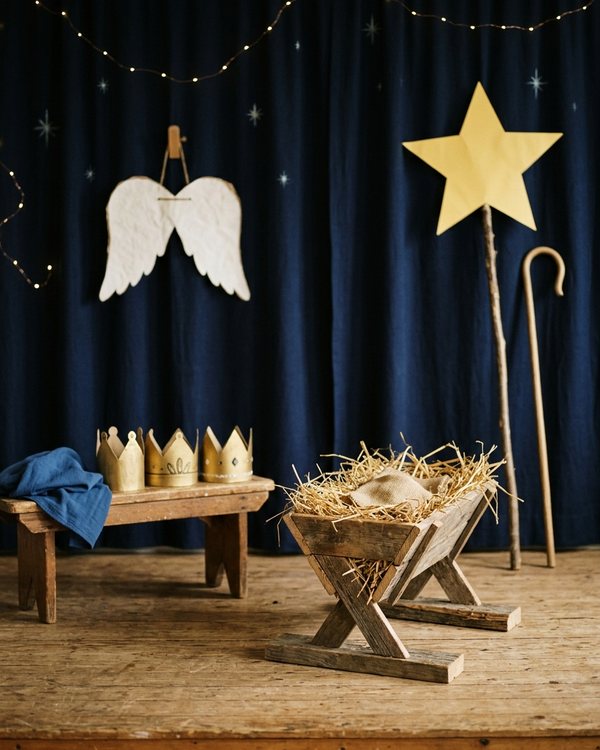
For a cloak, pin a second blanket on one shoulder with a safety pin. A beard is cotton wool glued to a strip of card on an elastic. Keep the tunic for December, because shepherds, Joseph and Mary in the Nativity play wear exactly the same.
15 saints: the symbol, where it comes from, what to make it from
The marks: Scripture means the symbol comes straight from the Bible, history means historical sources confirm it, and tradition means it came later, from legend or art.
Old Testament figures turn up at saints’ parties too, and that’s fine.
| Saint | Known by | Where it comes from | From things at home | Your child says |
|---|---|---|---|---|
| Noah | a dove with an olive leaf | Scripture Gen 8:11 | tunic, a white felt dove on a safety pin, a paper leaf | “I built the ark and saved the animals.” |
| Moses | two stone tablets | Scripture Ex 32:15 | tunic, a head scarf, a broom handle, tablets from double cardboard | “I brought people the Ten Commandments.” |
| David | a sling and a shepherd’s bag | Scripture 1 Sam 17:40 | short tunic, a fleece as a sheepskin, a cloth bag, a string sling | “I was a shepherd, and then a king.” |
| Queen Esther | a crown | Scripture Est 2:17 | a long dress, a scarf as a cloak, a crown from card and gold foil | “I saved my people because I was brave enough to go to the king.” |
| John the Baptist | camel’s hair and a leather belt | Scripture Mt 3:4 | a brown blanket or shaggy sweater, a belt | “I got people ready for Jesus.” |
| St. Peter | keys | the words about keys: Scripture Mt 16:19; keys in his hand: tradition | tunic and cloak, a cotton-wool beard, keys from card and kitchen foil, a fruit net as a fishing net | “I was a fisherman, and Jesus said I would get the keys of the kingdom.” |
| St. Michael the Archangel | armour, sword, wings | fighting the dragon: Scripture Rev 12:7; armour and scales: tradition | foil-covered cardboard armour, cardboard wings, a cardboard sword (quick version: tunic and sword) | “My name means: Who is like God?” |
| St. Nicholas of Myra | mitre, crozier, three bags of gold | bishop of Myra: history; gifts for three daughters: tradition | a red blanket as a cloak, a cardboard mitre, a crozier from a stick and rolled card | “I was a bishop, and I helped poor people in secret.” |
| St. Cecilia | an organ, a flower crown | tradition, most likely from a misunderstanding (below) | a light dress, a flower crown, a keyboard drawn on card | “I’m the patron saint of musicians.” |
| St. Agnes | a lamb | tradition, a play on agnus, Latin for lamb | a white dress, a flower crown, a toy lamb | “I loved Jesus with my whole heart.” |
| St. Lawrence | a deacon’s stole, a gridiron | deacon of Rome, died 258: history; the gridiron: tradition | a red shirt with a sash over one shoulder, a cardboard grill | “I showed that the poor are the Church’s treasure.” |
| St. Francis of Assisi | brown habit, white rope, birds | habit and rope: history; three knots on the rope (the vows): a later Franciscan custom; birds: tradition | a brown sheet, a white rope with three knots, a toy bird | “I loved everything God made.” |
| St. Thérèse of Lisieux | roses, a Carmelite habit | her words about a “shower of roses”, written down by her sister, Mother Agnes (1897); roses as her symbol: tradition | a brown dress, a white scarf with a black one over it as a veil, artificial roses | “I promised to let fall a shower of roses from heaven.” |
| St. Rita | a rose, a black habit | tradition | a black top or dress, a white scarf under a black one, one red rose | “I’m the patron saint of impossible causes.” |
| St. Maximilian Kolbe | Franciscan habit, round glasses, two crowns | the two crowns: from his own account of his childhood | a grey or black habit from a sheet, wire glasses, two card crowns: white and red | “I gave my life for another man.” |
If your child wants to be someone not on the list, the rule is the same: find their one object.
 Peter's keyscard + kitchen foil
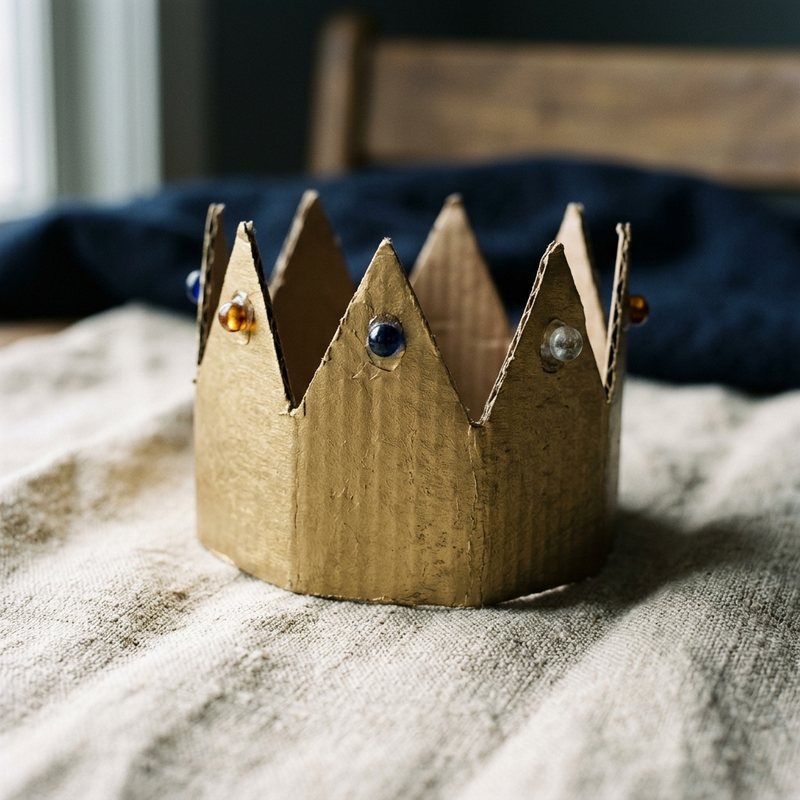 Esther's crowncard + gold paper + buttons
 Thérèse's rosestissue paper + ribbon
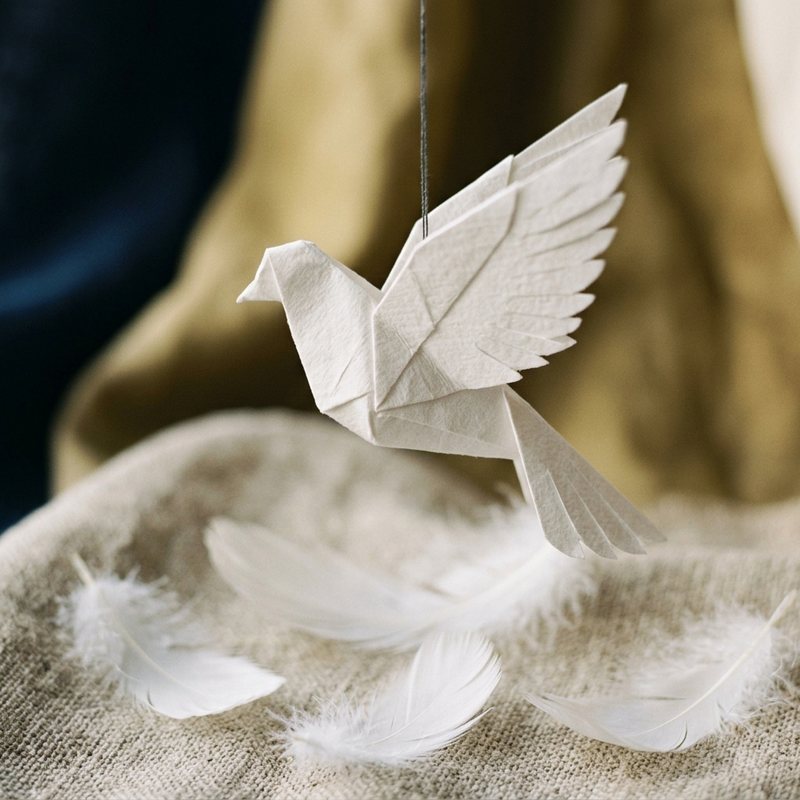 Noah's dovefelt + safety pin
 Moses' tabletsdouble card + paint
 Michael's scales and swordcoat hanger + cups + card
Which symbols are legend, not history?
A few of these symbols began as legends, and one probably as a mistake. Better to know before your child tells the whole party something that never happened.
St. Cecilia and the organ
Cecilia most likely became patron of music through a misunderstanding. The old account of her martyrdom says cantantibus organis: while the musicians played (it was wedding music), she sang in her heart to God alone. Later this was read as if she sat at an organ herself. That is how the Catholic Encyclopedia explains it.
St. Lawrence and the gridiron
That Lawrence was a deacon of Rome and died a martyr in 258 is certain. The story of his death on a red-hot gridiron is tradition; even the Catholic Encyclopedia says it raises serious doubts. The same tradition gives a lovely story: ordered to hand over the Church’s treasures, he brought the poor. At a party, tell the story of the poor, not the grill.
St. Nicholas — not the one from the ads
Historically we know very little about the fourth-century bishop of Myra (Catholic Encyclopedia). The story of the dowry for three poor daughters is tradition; in art it is often shown as three golden balls or three purses. A mitre and a crozier set him apart from the Santa of soft-drink ads.
St. Michael and the scales
Michael’s fight with the dragon is in Revelation (Rev 12:7). His usual attributes in art are a sword and wings. The scales for weighing souls come from the tradition of art, not from Scripture. Scales made from a coat hanger and two cups are great for children who don’t like “fighting”.
What to avoid with saint costumes
Martyrdom shown literally. For centuries art has shown martyrs with a palm and a crown, not with wounds. For Stephen, Lawrence or Agnes that is enough. No fake blood, no arrows, no “head on a platter” for John the Baptist.
A striped prison uniform and number. Maximilian Kolbe died at Auschwitz in 1941, giving his life for another prisoner (Wikipedia). A striped uniform on a child turns that place into a costume. Show Kolbe instead through the story he told his mother: as a boy he saw Mary holding two crowns, white and red, and he chose both. Two cardboard crowns are a good reason for a ten-year-old to tell that story themselves.
Dressing up as Jesus or Mary. We have found no Church guidance forbidding it and we won’t pretend there is. Our suggestion: at an All Saints’ party we dress up as saints and keep Jesus and Mary for the Nativity play and processions. If a parish or school runs the party, just ask.
Anything that can hurt. Swords only from cardboard. For David’s stones, use balls of scrunched-up newspaper. No small detachable parts for little ones.
Quick picks by age
Ages 3–5 (the costume must be comfortable; your child won’t hold a prop for two hours):
- Noah with a dove pinned to his shoulder,
- St. Agnes with a toy lamb,
- St. Francis with a toy bird.
Ages 6–9 (your child will happily say something of their own):
- St. Peter with the keys,
- Queen Esther,
- David with a sling,
- St. Michael.
Ages 10–12 (the costume can carry a story that needs explaining):
- St. Maximilian with two crowns,
- St. Cecilia and the story of the misunderstanding,
- St. Lawrence and the Church’s treasures.
If an eleven-year-old doesn’t want to dress up at all, the object in hand and the sentence are enough. That counts too.
Whatever the age, practise the sentence from the table in the car on the way to the party. In our game HOLY! HOLY! HOLY! every saint has their attribute on the card, and you score points for what you know about them. For a party, though, a bedsheet, a rope and one sentence will do.
Read next: All Saints’ Day vs Halloween — where both came from · Carlo Acutis for kids
As of September 2026. Bible references follow the New American Bible.
Eryk from holyholyholy.pl
Eryk makes HOLY! HOLY! HOLY! in Poland together with Sylwia and their children. He writes the rules, digs through the sources and works on the pictures; the children play first and criticise hardest (Joseph of Egypt is in the deck because their son asked for him). Every one of the 571 questions in the game was checked against its source. Here he writes about talking with children about the saints: concretely, with sources, without sugar-coating.
Frequently asked questions
How do I make a quick saint costume without sewing?
Fold a bedsheet or blanket in half, cut a hole for the head at the fold and tie it at the waist with a rope or a bathrobe belt. One object made of cardboard or found at home does the rest: keys, a crown, a felt dove, a rose. It takes about fifteen minutes.
What saint can a girl dress up as?
Easy and recognisable: Queen Esther (a crown), St. Agnes (a white dress and a toy lamb, good for a three-year-old), St. Thérèse of Lisieux (a brown dress, a veil and roses), St. Cecilia (a flower crown and a cardboard keyboard) and St. Rita (a black veil and one rose).
What saint can a boy dress up as?
The least work: St. Peter (cardboard keys), Noah (a tunic and a felt dove), David (a string sling and a bag) and St. Francis (a brown sheet and a white rope). St. Michael the Archangel is a favourite, but armour and wings are a weekend project. The last-minute version is a tunic and a cardboard sword.
Can my child dress up as Jesus or Mary for an All Saints' party?
We have found no official Church guidance forbidding it. Our suggestion (an opinion, not a Church rule): at an All Saints' party we dress up as saints, and keep Jesus and Mary for the Nativity play and processions. If a parish or school is organising the party, ask them.
Is a St. Maximilian Kolbe costume in a striped prison uniform a good idea?
We'd advise against it. A striped uniform with a number turns a concentration camp into a party costume. Show Kolbe instead with a Franciscan habit and two crowns, white and red, from the story he told about his own childhood.
Why is St. Cecilia shown with an organ?
Most likely because of a misunderstanding. An old account of her martyrdom says that while music played at her wedding, she sang to God in her heart. Later this was read as if she played the organ herself, and so she became patron of musicians.
Sources
Marks: [H] — Scripture, document, recorded fact · [T] — tradition, legend, custom · [N] — Church teaching · [D] — study, data.
- HGen 8:11; Ex 32:15; 1 Sam 17:40; Est 2:17; Mt 3:4; Mt 16:19; Rev 12:7 — New American Bible (bible.usccb.org)
- HCatholic Encyclopedia: St. Nicholas of Myra (newadvent.org, 1911)
- TCatholic Encyclopedia: St. Cecilia (newadvent.org)
- TCatholic Encyclopedia: St. Lawrence (newadvent.org)
- TCatholic Encyclopedia: St. Agnes of Rome (newadvent.org)
- HArchives of the Carmel of Lisieux: Pluie de roses
- HArchives of the Carmel of Lisieux: Yellow Notebook, June 1897
- HWikipedia: Maximilian Kolbe — the vision of two crowns, death at Auschwitz (1941)