SP
MOJŻESZ
Prorocy
Wskaż innego proroka, czyli kogoś z tym samym znaczkiem Zastępu — albo powiedz, że go nie ma.
MMXXVI03/40
Instead of fictional superheroes — stories of flesh-and-blood people: a Catholic card game about the saints for the whole family.
100% physical, played at one table — from age three to grandpa.
A card
is a sentence
about a hero
who really lived.
By the grace of God.
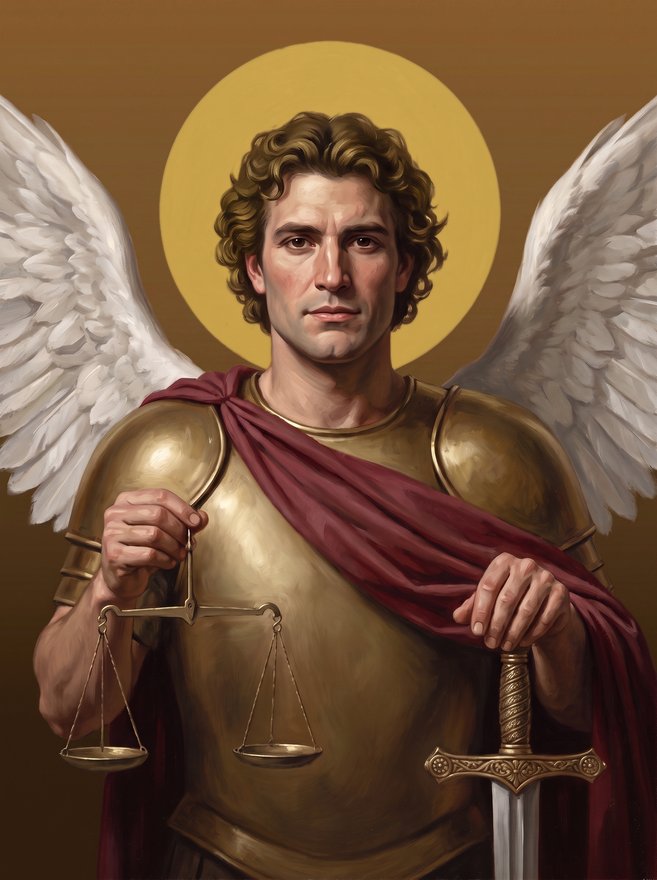
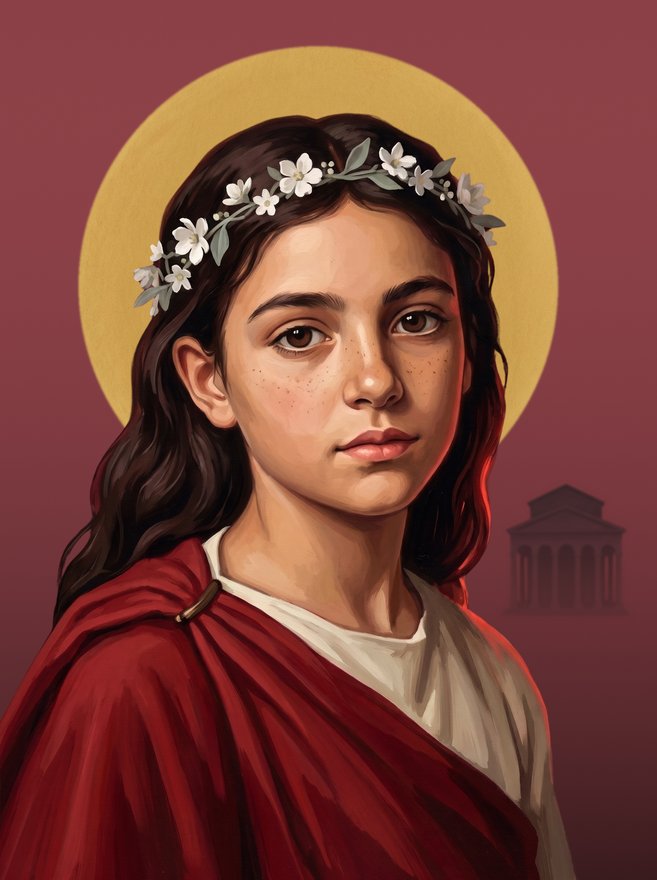
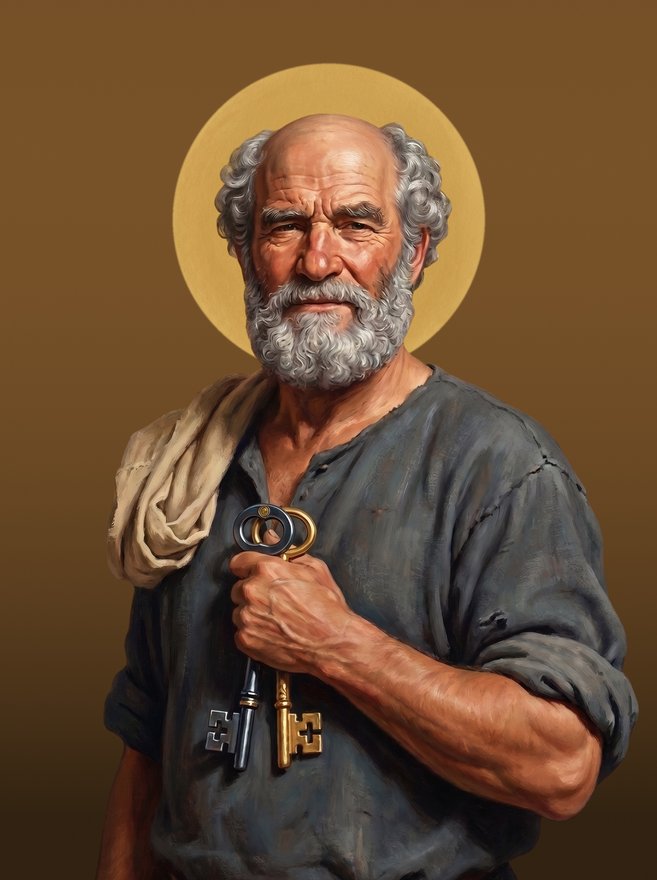
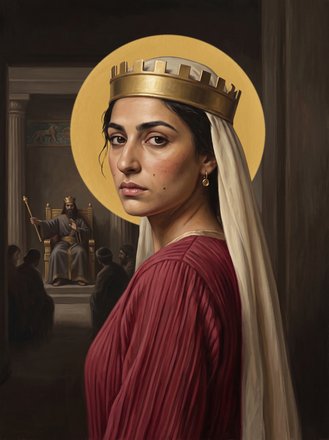
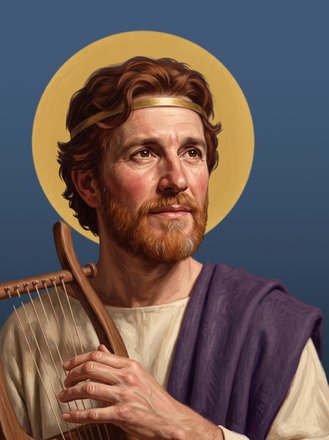
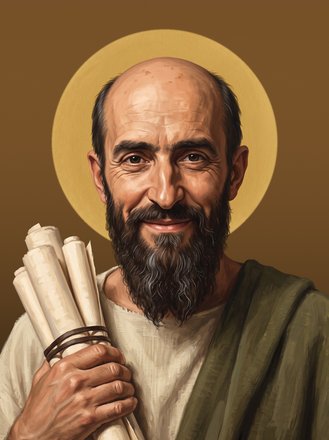
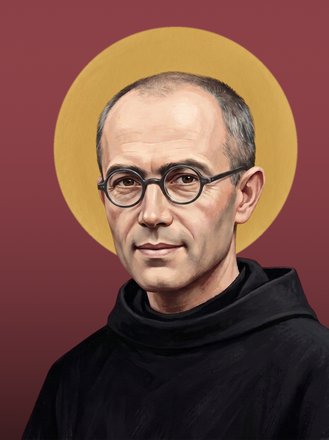
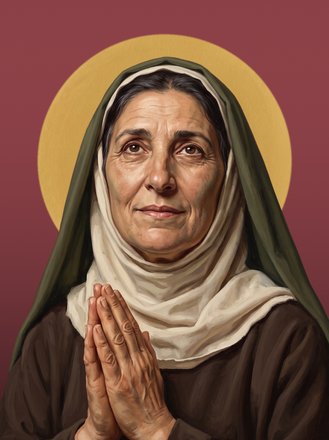
Gouache and tempera on canvas, a single light source, a muted earthen palette. Click a card to step closer — as you would in a museum.
Cards shown in Polish — the printed game is Polish-first.
The faces of the saints are flesh-and-blood people, not idealised postcards.
4 difficulty levels in a single round. Grandpa plays a 4-year-old as an equal.
The rules fit on one folded insert. Your first turn is a card and one Challenge.
No aggression, no violence, no beating other players. Co-operation and closer bonds.
Historical research kept apart from pious tradition. Church consultation before print.
We had enough of commercial card games, Halloween monsters and Hollywood heroes. We made games you can be genuinely proud of, as a parent and as a Christian.
Instead of invented monsters, we uncover the astonishing stories of real people from Scripture and the history of the Church.
A game takes about 20 minutes, and no two are alike. It never goes stale, because the result turns on what you know about the saints — not on what you hold.
No booster packs, no random bundles. Collector cards change the picture only — never the strength of a card. Knowledge decides.
No more going easy on the child. Four levels of answering — from pointing a finger to a quiz — and each one scores exactly the same.
Scroll — the colour will walk you through history
Noah, Abraham, Moses, David… Prophets and patriarchs who led their people through the desert — literally, and not only. Blue marks every card of this epoch.
People who left their nets and went. The ochre of Galilean dust — the middle of the deck and the middle of the story.
From the catacombs to Maximilian Kolbe and John Bosco. The carmine of this epoch is the colour of courage — the Circle closes, and the deck grows with every generation.
That is not a rhetorical question. At this table everyone gets a question cut to their size — a child points at a symbol, an adult answers from Church history — and a point is worth exactly the same. Nobody is given a handicap and nobody is bored. Click through both sides of the table.
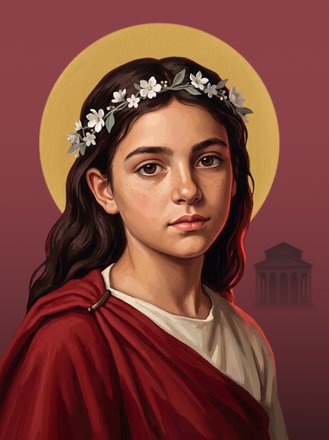
Moses is looking for another Prophet.
The child reads on their own a historical note from the booklet and answers the quiz question attached to it.
An adult reads a simple quiz aloud from the booklet, and the preschooler, who cannot read yet, answers by ear.
The youngest solve picture-based tasks only — finding symbols on the cards with a finger, exactly as on the interactive table above.
One game, the same points — no "junior" edition.
Three epochs by the colour of the pip: a child places the saints on the timeline.
Of 40 cards: 24 challenges accept "there is none", 11 ask you to count.
No stronger cards, no random packs.
In this game the seven deadly sins are seven cards. None takes points or attacks a player. A Trial lands in the Circle beside a saint — and makes things harder around it: laying more cards, drawing, calling. The saint stays where it is. As in life: sin does not take a person away, it makes it harder for them to connect with others.

The card in your hand matches the saint in the Circle — you can lay it beside that saint. What happens when a Trial lands next to it? PYCHA touches the saint in the Circle. Nobody can lay a card beside that saint through what joined the two — the card in your hand has to go somewhere else. The saint itself stays in the Circle and still counts. It is lifted by a saint with the Virtue POKORA. NOE carries that Virtue — and a Trial never hinders a saint with its own Virtue. It lies beside the Trial, so call that saint: answer its Challenge. It becomes your Intercessor, and the lifted Trial goes in front of you and scores the same. The card in your hand can be laid again.
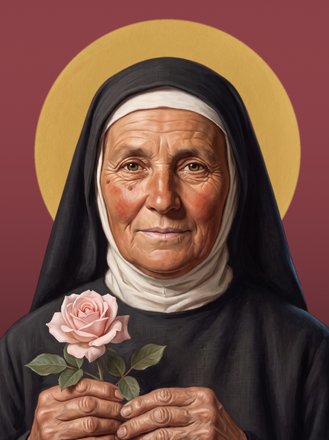
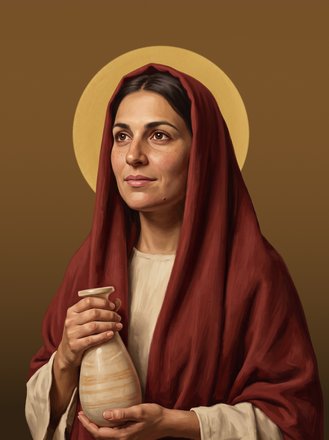
The card in your hand matches the saint in the Circle — you can lay it beside that saint. What happens when a Trial lands next to it? CHCIWOŚĆ touches the saint in the Circle. Nobody can lay a card beside that saint through what joined the two — the card in your hand has to go somewhere else. The saint itself stays in the Circle and still counts. It is lifted by a saint with the Virtue HOJNOŚĆ. ESTERA carries that Virtue — and a Trial never hinders a saint with its own Virtue. It lies beside the Trial, so call that saint: answer its Challenge. It becomes your Intercessor, and the lifted Trial goes in front of you and scores the same. The card in your hand can be laid again.
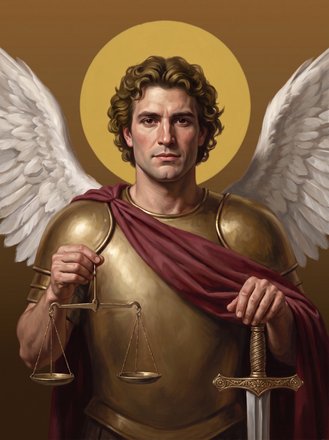
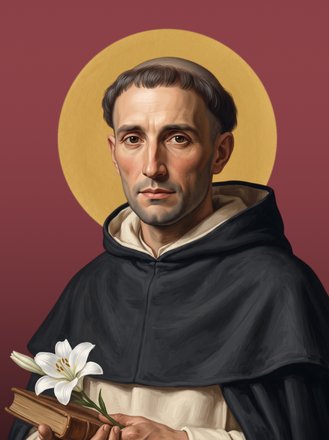
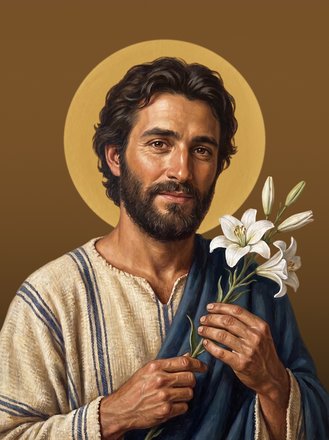
The card in your hand matches the saint in the Circle — you can lay it beside that saint. What happens when a Trial lands next to it? NIECZYSTOŚĆ touches the saint in the Circle. Nobody can lay a card beside that saint through what joined the two — the card in your hand has to go somewhere else. The saint itself stays in the Circle and still counts. It is lifted by a saint with the Virtue CZYSTOŚĆ. ŚW. JÓZEF carries that Virtue — and a Trial never hinders a saint with its own Virtue. It lies beside the Trial, so call that saint: answer its Challenge. It becomes your Intercessor, and the lifted Trial goes in front of you and scores the same. The card in your hand can be laid again.
The card in your hand matches the saint in the Circle — you can lay it beside that saint. What happens when a Trial lands next to it? ZAZDROŚĆ touches the saint in the Circle. Nobody can lay a card beside that saint through what joined the two — the card in your hand has to go somewhere else. The saint itself stays in the Circle and still counts. It is lifted by a saint with the Virtue MIŁOŚĆ. MARIA MAGDALENA carries that Virtue — and a Trial never hinders a saint with its own Virtue. It lies beside the Trial, so call that saint: answer its Challenge. It becomes your Intercessor, and the lifted Trial goes in front of you and scores the same. The card in your hand can be laid again.

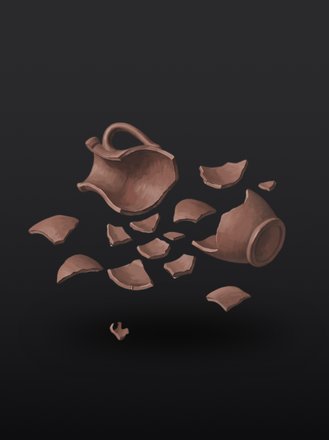
You lay a card from your hand into the Circle — and, as always, draw a new one. What happens when a Trial lands next to it? NIEUMIARKOWANIE lies right beside. You can still lay the card — but whoever lays it next to this Trial draws no new card this turn. It is lifted by a saint with the Virtue UMIARKOWANIE. ESTERA carries that Virtue — and a Trial never hinders a saint with its own Virtue. It lies beside the Trial, so call that saint: answer its Challenge. It becomes your Intercessor, and the lifted Trial goes in front of you and scores the same. You draw again after laying a card.
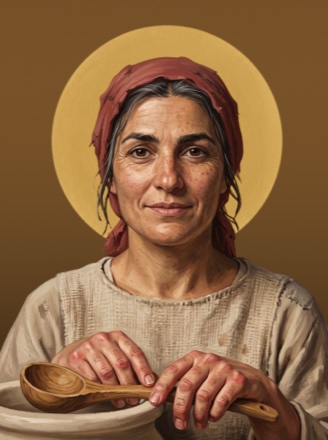
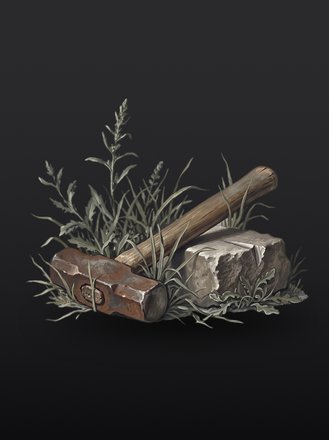
The card in your hand matches the saint in the Circle — you can lay it beside that saint. What happens when a Trial lands next to it? GNIEW touches the saint in the Circle. Nobody can lay a card beside that saint through what joined the two — the card in your hand has to go somewhere else. The saint itself stays in the Circle and still counts. It is lifted by a saint with the Virtue CIERPLIWOŚĆ. NOE carries that Virtue — and a Trial never hinders a saint with its own Virtue. It lies beside the Trial, so call that saint: answer its Challenge. It becomes your Intercessor, and the lifted Trial goes in front of you and scores the same. The card in your hand can be laid again.
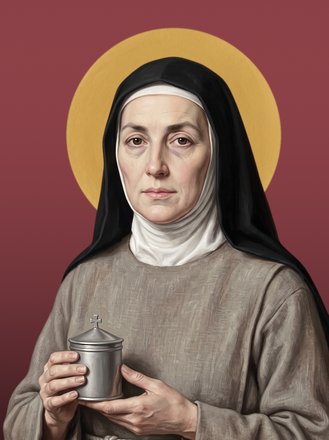
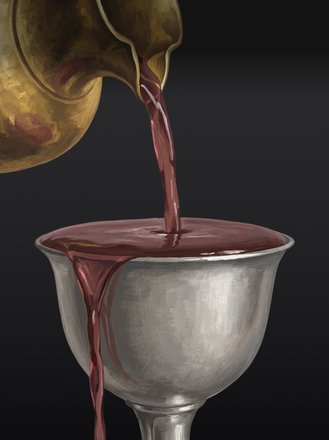
The saint lies silent in the Circle — on your turn you can call it. What happens when a Trial lands next to it? LENISTWO touches this saint. It stays in its place, but while the Trial is beside it, nobody can call it. It is lifted by a saint with the Virtue GORLIWOŚĆ. MOJŻESZ carries that Virtue — and a Trial never hinders a saint with its own Virtue. It lies beside the Trial, so call that saint: answer its Challenge. It becomes your Intercessor, and the lifted Trial goes in front of you and scores the same. The saint can be called again.
Choose a Trial
Every Trial has one Virtue that answers it — and a saint with that Virtue, called by anyone at the table, lifts it from the Circle. "We are not contending against flesh and blood" (Eph 6:12): a child meets this here as a rule of play, long before meeting it as a sentence.
A real box and thick cards on the table. Pick the deck for your family.
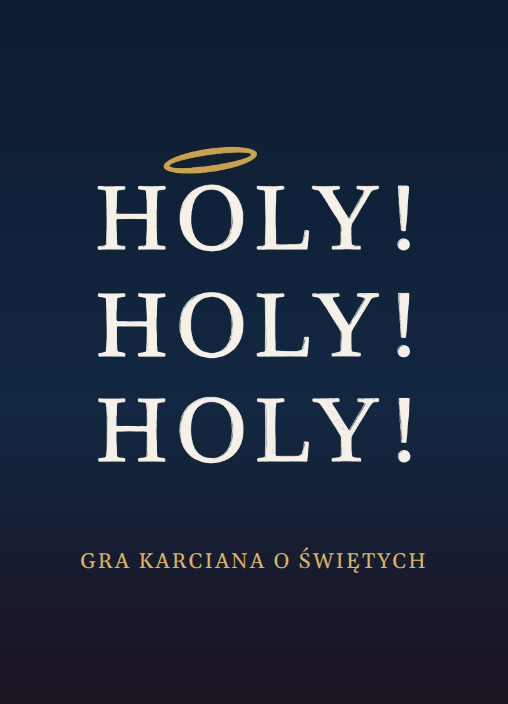

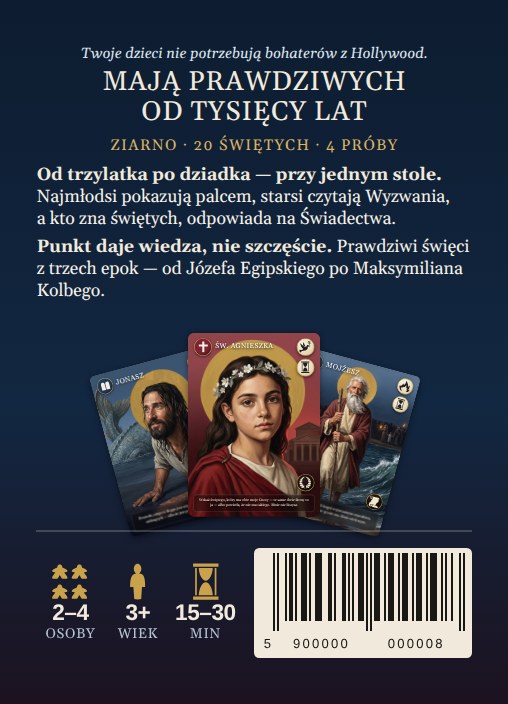



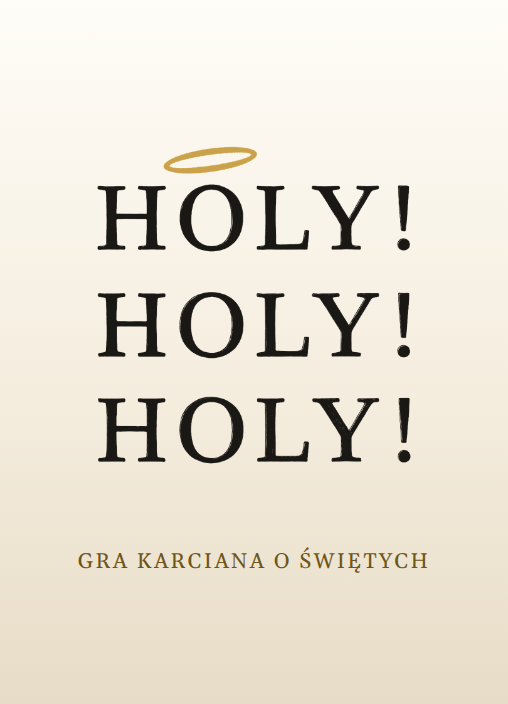

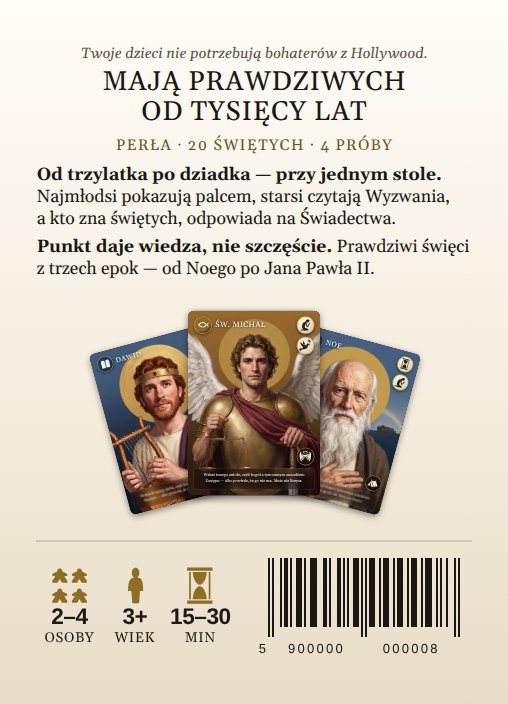


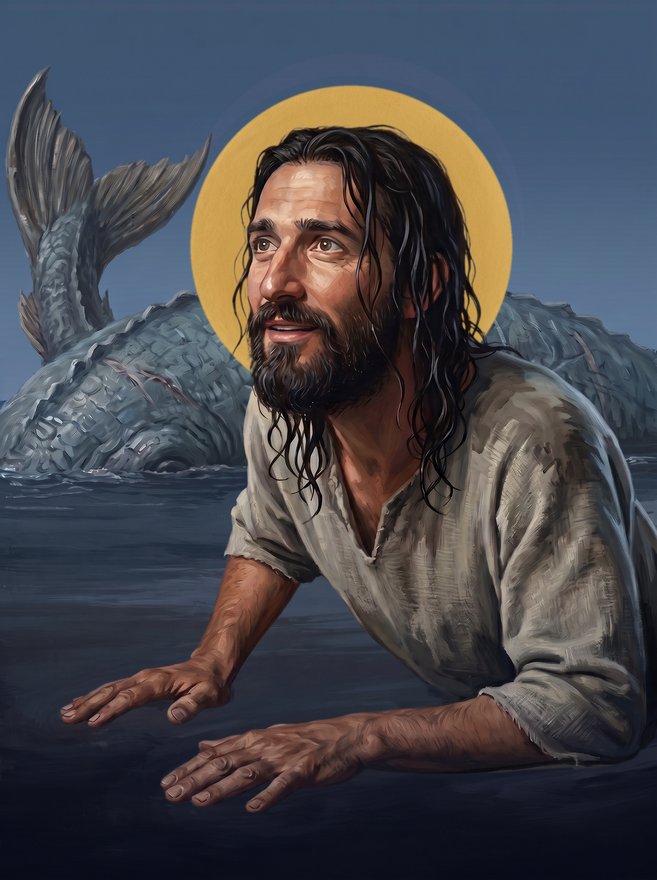
The complete 40-saint roster in two compact tuckboxes. Full standalone gameplay — perfect for autumn evenings and All Saints celebrations.
In a box of deep navy — 20 more heroes (St Paul, Moses and St Maximilian Kolbe among them).
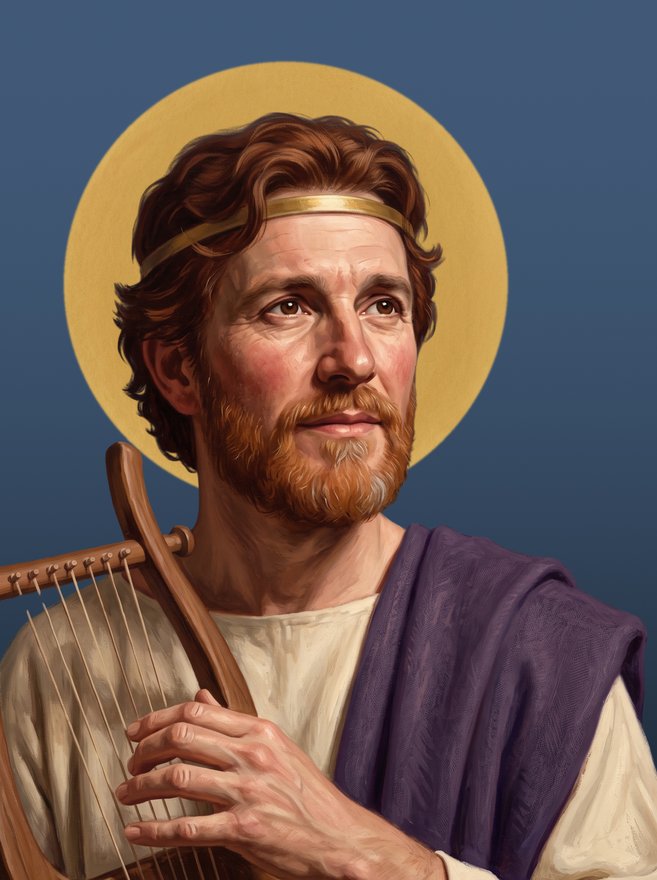
The right gift for the smaller occasions (an Easter basket, Children’s Day). A full entry point into the game with 20 cards (St Peter, St Augustine and King David among them).
From three. The SEEKER level (ages 3–4) plays paired with an adult: the adult offers two cards, the child picks one and points at what matches what. No reading and no knowledge of the saints required.
No. The LISTENER (ages 5–6) has the Challenge read aloud and answers by pointing in the Circle — nothing is hidden, so the reader gives nothing away. Reading only comes in at the PUPIL level (7–11).
Everyone plays at their own level in the same turn, and every level scores the same. The WITNESS (12+ and adults) answers questions about the lives of the saints — no allowances. In simulations no level wins more often than another because of age.
2–4 players, about 20 minutes. The hand shrinks as players are added (4 · 3 · 2 cards) — deliberate, and confirmed across hundreds of test games.
No — and you never will. A point is won by knowing, never by owning a card. Collector cards change the illustration only; there are no booster packs and no random bundles.
Every card carries historical research with its source written down, kept apart from pious tradition. Before print, the whole text goes to church consultation.
The games are in testing with families right now and go to print in 2026. Sign up and we will write to you when the pre-sale opens — at a pre-sale price below the shop one.
🔒 The data controller is Eryk Panter (5lamp). Your address will be used only to tell you about the launch. Zero spam. Unsubscribe at any time. Privacy policy.
A question about the game, a parish partnership, or anything else — we answer as fast as we can.
Prefer plain e-mail? Write straight to contact@holyholyholy.pl
🔒 Your message is sent to us by e-mail and is not stored on the server or added to any list.
Looking for a game that helps children get to know the saints? I can tell you how it plays and from what age — who is it for?
See the decks and prices